Dhanteras
Families prepare for the festival; children can help tidy or make a decoration.
A festival-of-lights guide for little ones aged 1.5 to 5.5 — 2026
Diwali activities for kindergarten can be simple, bright and full of meaning. This preschool guide gathers stories, crafts and safety ideas for parents and teachers.
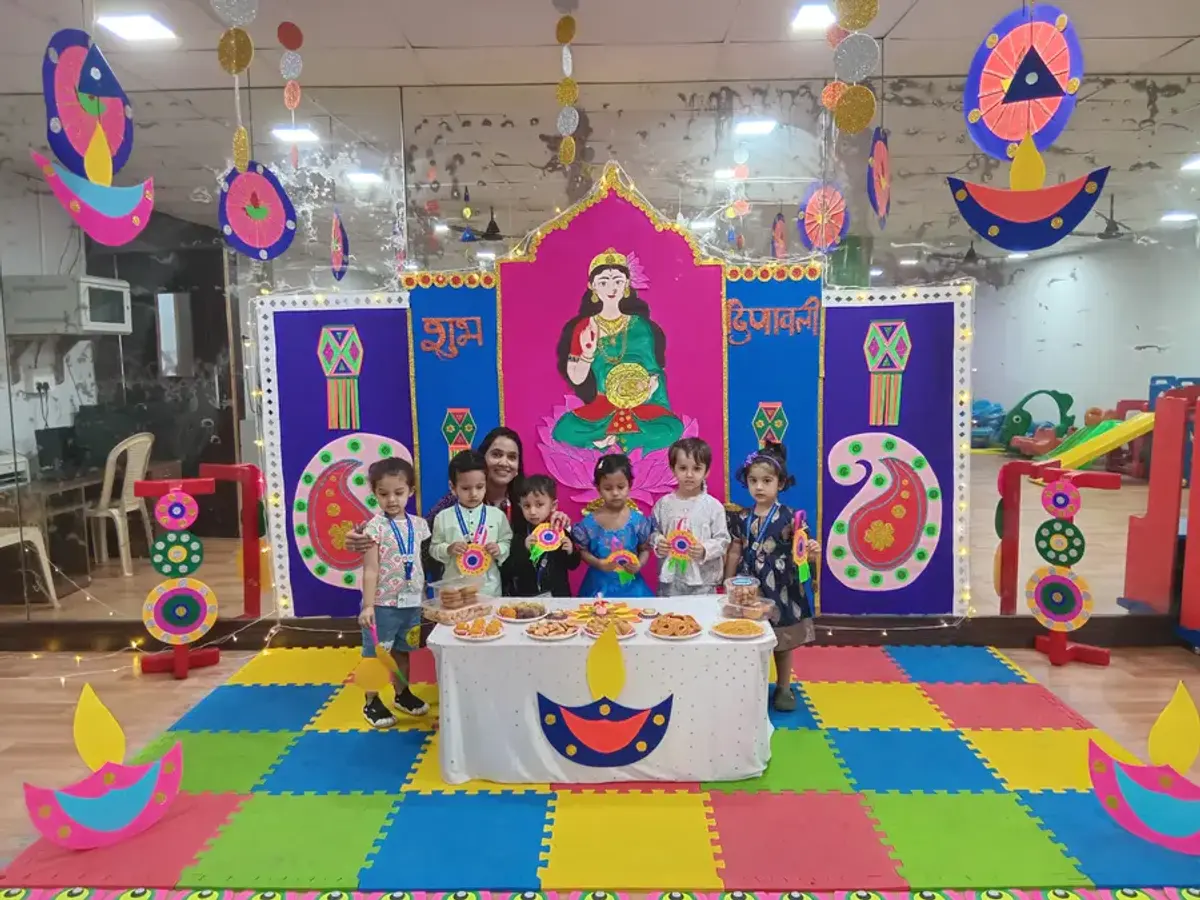
A little glow, a little colour and time together: the simplest ingredients can make a festival feel special to a child.
Diwali, also called Deepavali, is often known as the festival of lights. Families brighten homes, arrange diyas, create rangoli and share festive food.
Diwali stories remind us that good can overcome what is unkind or frightening, and hope can return after a difficult time. Different families and regions celebrate in their own ways. A child can notice a lamp, place paper flowers, listen to a story or enjoy a sweet with loved ones.
Explain it simply: “Diwali is a time when many families celebrate light, kindness and being together.” Keep the conversation open. Children may ask why a diya has a flame, what a rangoli means or why a relative celebrates differently.
Diwali is a five-day festival. Customs differ from home to home; here are names children may hear, with no dates needed to enjoy the stories.
Families prepare for the festival; children can help tidy or make a decoration.
Known by different names in different places, it is part of the joyful lead-up.
Families light lamps, share prayers or quiet moments, and enjoy being together.
Many communities mark this day with gratitude, family customs and special food.
Siblings and loved ones celebrate affection and the care they share.
For toddlers, Diwali can mean noticing warm lights, bright colours and familiar faces. Offer a large paper diya to decorate with chunky crayons, let them place big paper petals with you, or sing a short rhyme. Stay beside them around every lamp and choose battery lights where little hands can reach. There is no need for a long explanation; a few minutes of shared attention is plenty.
Preschoolers enjoy choosing colours, following a few craft steps and helping with a small family task. Tell them Diwali is a festival of lights and kindness, then invite them to sort paper shapes for rangoli or count pretend diyas. Keep scissors, small decorations and any real flame with an adult. Let your child lead the conversation and celebrate the process more than a neat result.
Kindergarteners can compare traditions and retell a short story in their own words. They can plan a repeating rangoli pattern, count lamps, dictate a greeting card or explain a craft to a friend. Make room for different customs: “Some families do this, and some do that” is respectful and true. Give children safe responsibility, such as arranging paper decorations or choosing a storybook.
Read slowly, pause for questions and let pictures do some of the talking. These gentle retellings are starting points, not the only way a family may tell a tradition.
Long ago, Prince Ram, Sita and Ram’s brother Lakshman had been away from home. At last, they returned to Ayodhya. The people were happy to welcome them back. At evening, families placed little lamps outside so the path looked bright.
The lamps shone like tiny stars. Friends greeted one another, and the city felt joyful. Children can imagine waiting for someone they love and welcoming them home.
Many people remember Diwali through this homecoming story and the triumph of good over bad. Tell the version meaningful to your family. Ask, “How would you help someone feel welcome?”

Many families honour Goddess Lakshmi as a symbol of good fortune and wellbeing. Before Diwali, people may clean and brighten their homes, decorate a doorway or arrange flowers. Children can see this as making a welcoming place for loved ones.
Invite your child to return books, wipe a low table or arrange paper flowers. A clean home is useful every day; the festival gives families a reason to prepare together. The important part is not a perfect room, but caring for one another.
Some households pray to Lakshmi, while others observe different customs. Ask, “What makes our home feel welcoming?”

In a little clay shop sat a small diya named Tara. She watched the bigger lamps being chosen and wondered, “My bowl is tiny. Can my light matter?”
On Diwali evening, a family carried Tara home and placed her on a high, safe shelf beside an adult. Her wick glowed gently. Across the room, another lamp shone, and then another. Soon the whole window looked warm and welcoming.
Tara saw a child smile at the bright room. “I may be small,” she thought, “but I can be part of something lovely.” The family thanked one another for helping prepare. Tara learned that a little kindness, like a little light, can help everyone feel welcome.
A gentle thought
Small acts of care matter, especially when we share them.
One festival holds many local customs, foods, stories and family memories. Share what is familiar, and make space for other traditions too.
In Maharashtra, children may see colourful rangoli near a doorway and an akash kandil—a decorative lantern—hanging outside a home. Families prepare faral, a collection of festive snacks. Chakli, karanji, laddoo and shankarpali are familiar examples, though recipes and favourites vary. Children can help name shapes, set out napkins or watch an adult prepare food.
Some children build a small mud killa, or fort, with family or friends. This miniature play tradition can spark talk about hills, walls and imagination. A child can use blocks or modelling dough and invent a story about who lives in the fort. Choose age-appropriate materials and supervise closely.
Padwa and Bhau Beej are also part of the season for many families. Customs may include visiting relatives, sharing food or expressing affection. Ask grandparents and caregivers what they remember from childhood; the answers can become treasured family stories.
Many families worship Goddess Kali around this festive time, with lights and regional customs.
Some homes include an early morning oil bath and festive clothes, alongside other customs.
Many families mark this day with offerings and stories connected with Lord Krishna.
Customs vary; invite children to notice both shared and local traditions.
These Diwali activities for kindergarten use everyday materials and leave room for children’s choices. An adult should prepare cutting jobs and stay close throughout.

Make a bright paper lamp with no flame.

Shape a lamp-like bowl with soft dough.

Turn a handprint into a keepsake picture.

Explore patterns with chalk, rice or petals.

Create a lantern decoration, never a light source.

Send a message to someone the child loves.

Make a lotus-inspired paper decoration.

Make quiet, colourful bursts on paper.

Make early maths hands-on with pretend lamps.

Notice colour, shape and position through play.

Build an imaginative miniature fort.
Read a gentle Diwali story, pause at pictures and invite children to share what “welcome home” feels like.
Offer a large paper outline and pre-cut shapes. Each child adds a petal, dot or colour to a shared design.
Use paper diya counters and number cards to count, sort small groups and compare which row has more.
Use large paper shapes or play food, not real sweets. Group by shape or colour, then describe the pattern.
Set out pre-cut paper panels, glue sticks and broad crayons. Let children design with an adult nearby.
Explore glow, bright, lamp, pattern and welcome. Draw a word, act it out or use it in a sentence.
Short lines make speaking feel manageable. Practise with a trusted grown-up, speak at your own pace and use words that feel natural.
Hello everyone!
Diwali is the festival of lights.
We make rangoli and share happy moments.
I like bright diyas and stories.
May your Diwali be joyful. Thank you!
नमस्ते सभी को!
दीवाली रोशनी का त्योहार है।
हम रंगोली बनाते हैं और खुशियाँ मनाते हैं।
मुझे दीये और सुंदर कहानियाँ पसंद हैं।
आप सभी को दीवाली की शुभकामनाएँ। धन्यवाद!
सर्वांना नमस्कार!
दिवाळी हा दिव्यांचा सण आहे.
आपण रांगोळी काढतो आणि आनंद साजरा करतो.
मला दिवे आणि गोष्टी आवडतात.
सर्वांना दिवाळीच्या शुभेच्छा. धन्यवाद!
Diwali is a festival of lights.
My family makes our home bright.
I like colourful rangoli.
We share stories and festive food.
I wish everyone a happy Diwali.
Diwali is also called Deepavali.
Many families celebrate with lights.
We make colourful rangoli patterns.
I can decorate a paper diya.
My family shares special food.
We listen to stories together.
I try to be kind and helpful.
Happy Diwali to everyone!
Show a paper diya or rangoli picture.
Say which colours you chose.
Tell how you made your pattern.
Name someone you want to greet.
Share one kind thing you can do.
A little light beside the door,
A flower pattern on the floor.
We share a smile, we share a song,
And help each other all day long.
नन्हा दीप चमकता जाए,
रंगों वाली रंगोली भाए।
मिलकर गाएँ, हँसते जाएँ,
प्यार से सबका दिन सजाएँ।
छोटासा दिवा हळूच हसे,
रांगोळी रंगांनी सुंदर दिसे.
मिळून गाऊ, आनंद वाटू,
प्रेमाने सारे दिवस सजवू.
Little lights, kind hearts, happy homes.
Choose a quiet sky and a brighter smile.
Make rangoli with petals, colour and care.
Less smoke, less noise; more time to share.
Keep flames with grown-ups, always.
Celebrate gently; let every neighbour rest.
Try the quiz together, then use the facts and captions as conversation starters. Children may answer aloud or choose a radio option.
A ten-question family quiz
Choose one answer, then check it. Tab to the choices; arrow keys move between radio options.
Lovely playing, little learner!
0 / 10
Every question is a chance to learn something new.
Diwali is also called Deepavali, a name often translated as a row of lights.
People celebrate Diwali in many parts of India and around the world.
A diya is a small lamp; families may choose clay, metal or decorative lamps.
Rangoli designs can be geometric, floral or inspired by imagination.
An akash kandil is a lantern decoration often seen in Maharashtra.
Faral is a name for festive snacks enjoyed in many Maharashtrian homes.
Some families celebrate Kali Puja during the Diwali season in Bengal.
Some South Indian families mark Deepavali with an early morning oil bath.
Govardhan Puja is observed by many families in North India.
There are many ways to celebrate; a shared story can help a child feel included.
Little hands, bright Diwali card.
Every colour, every helper.
Stories, smiles and a gentle glow.
A tiny diya, a big little artist.
Celebrating light and kindness.
Children can enjoy colour and togetherness while adults take responsibility for flames, noise and small materials. Adjust ideas to each child and setting.
Keep young children well away from firecrackers, sparklers and open flames. Do not let a child light, hold or pick up fireworks; choose a calm activity instead.
Use battery-operated LED diyas near children. If an adult lights a traditional lamp, keep it stable, away from curtains and curious hands, and never leave it unattended.
Loud sounds can be upsetting. Offer a quiet room, familiar comfort item or suitable ear protection, and allow a child to leave noisy places without pressure.
Supervise craft time. Choose age-appropriate, non-toxic supplies; adults handle scissors and hot glue, and small parts stay away from children who may mouth them.
Keep familiar meals, rest and bedtime steady. Offer water, breaks and a calm place during a busy celebration.
Choose a greener celebration: use petals or chalk for rangoli, reuse paper decorations and reduce smoke and noise.
Consider pets, neighbours and older people. Give pets a secure quiet space with water, and choose considerate hours and volume.
Before the day, explain what to expect and agree on a quiet place to take a break. Keep water and a familiar snack nearby; children may step away whenever they need.
Adults set the pace. A child can enjoy Diwali with a simple card, family snack or kind greeting.
Practical answers for a gentle, age-appropriate celebration. Open a question to read more.
Say, “Diwali is a time when families celebrate light, kindness and being together.” A picture book or paper lamp makes it concrete.
Try a paper diya, rangoli, greeting card or pretend-sweet sorting game. Let children choose colours, with an adult nearby.
Use non-toxic, age-appropriate supplies and supervise. Pre-cut pieces; avoid small parts if a child mouths them.
Keep children away from lit or used fireworks; never let them handle them. Choose quiet paint art or LED diyas.
Choose comfortable clothes for play, follow school guidance and avoid trailing fabric. A festive detail is enough.
Diwali (Lakshmi Puja) in 2026 is on Sunday 8 November. Families may observe the surrounding days according to their own customs and local calendars.
Start with a large circle, flower or dot grid using chalk, petals or paper. Avoid fine powders.
A decorative Diwali lantern common in Maharashtra. Make a paper version with pre-cut pieces; hang it away from flames.
Use petals, chalk or reusable paper shapes. Keep materials away from children’s mouths and tidy up after play.
Explain what to expect, stay close and offer a quiet place. A quieter celebration is fine.
Find programme information and more family reading from Rainbow Preschool International.
Find programme information for your family.