
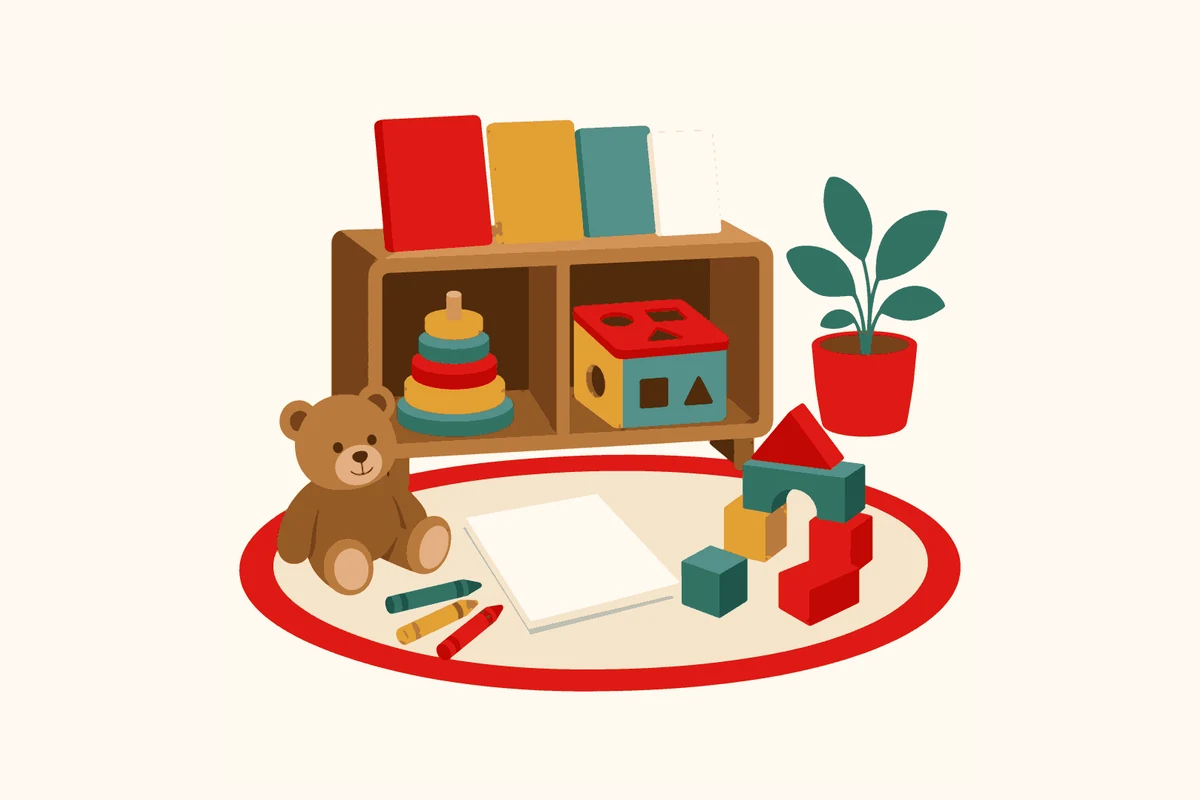
Solitary Play Activities for Toddlers and Preschoolers
Reviewed by Rainbow Preschool Curriculum Team — Last updated:
Solitary play is an essential stage in child development where children play alone, fully absorbed in their own activities. Understanding and encouraging this type of play helps build independence, creativity, and self-regulation skills. At Rainbow Preschool International, we create environments that support healthy solitary play.
What is Solitary Play?
Solitary play occurs when a child plays independently, exploring toys and activities on their own. This is particularly common in toddlers (ages 1-2) and remains important even as children develop social play skills. At Rainbow Preschool, we provide dedicated time and spaces for solitary play in our Playgroup and Nursery programmes, recognizing its importance in child development.
- Natural developmental stage for toddlers
- Builds concentration and focus
- Develops imagination and creativity
- Promotes independence and self-reliance
- Reduces anxiety about being alone
Age-Appropriate Solitary Play Activities
Here are activities that encourage healthy solitary play for different ages:
- 1-2 years: Stacking blocks, playing with soft toys, exploring sensory bins
- 2-3 years: Simple puzzles, playdough, coloring, looking at picture books
- 3-4 years: Building with blocks, imaginative play with dolls/figures, art activities
- 4-5 years: More complex puzzles, drawing, construction toys, pretend play
How to Encourage Solitary Play
While children naturally engage in solitary play, parents can support this development:
- Create a safe, child-friendly play space at home
- Rotate toys to maintain interest
- Resist the urge to constantly entertain your child
- Start with short periods and gradually increase duration
- Praise your child for playing independently
Solitary Play at Rainbow Preschool
Our classrooms at centres like Manpada, Hariniwas, and Anand Nagar are designed with quiet corners and activity stations where children can engage in focused independent play. This balance of solitary and social play helps children develop holistically. Teachers observe and support without interrupting, allowing children to develop problem-solving skills and creativity. Contact us to schedule a visit to our classrooms.
Frequently Asked Questions
- Is it normal for my child to prefer playing alone? — Yes, especially for toddlers. Solitary play is a normal developmental stage. Children gradually develop parallel and cooperative play skills as they grow.
- How long should my child be able to play alone? — This varies by age. Toddlers might play alone for 5-10 minutes, while 4-5 year olds can often sustain 20-30 minutes of independent play.
- Should I be concerned if my preschooler always wants to play alone? — Some independent play is healthy, but if your child consistently avoids social interaction, discuss this with your pediatrician or preschool teacher.
- What if my child gets frustrated during solitary play? — Some frustration is normal and helps build problem-solving skills. Observe from a distance and only intervene if truly needed.
Related Pages
Our Network: Rainbow International School — CBSE-affiliated K–12 school in Thane West, Nursery to Class 12